Showing posts with label editing. Show all posts

Sunday, 9 March 2014

Kicking back with the books


Half term ending today with exams to come Monday morning – because there’s no better day to have one of what will feel like an endless number of trails; and I can’t say I have much to show for all my ‘well-spent’ free time, other than many, many completed series of anime. Not all the time was wasted – which eases the welling guilt. I have made a good start into editing my next book, which I hope to approach publishers with soon, and I’ve taken a few bites out of revision, namely French and Japanese grammar; once again Spanish fights to get a look-in.
            It’s my father’s 50th next week, and I’ve had to devote a lot of time into choosing the right gift for him, especially as he’s a modest person who insists only a card is necessary. I’ll be flying back for the sole purpose of spending the day with him, (because I’m nice once in a while), I’m sure there will be plenty I can accomplish while away from my studies for a week too.
            On to business, I must say I’ve fallen out of the loop in reading since I finished Madam Bovary all those weeks ago, I’ve been buying manga in French and Japanese to improve my linguistic skills, but I will start on something a little more challenging in the next few weeks I suppose. I have however, started skimming through blogs for inspiration such as, probably my favourite poet around, Katy Evans-Bush at http://baroqueinhackney.com . After meeting her in Bangor last year (or so) I’ve enjoyed stopping by when I’ve had the time to keep up to date with her going’s on – which I do more frequently than watching the news, to put into context how isolated I can be. Every time I look at an experienced blog though, I see how it’s certainly a good thing to look to your seniors for advice and example.

Naturally being on Erasmus has given me the opportunity to do everything I’ve not had time to do over the last decade, being in full-time education; however as people tell me, I can’t do ‘everything’ whatever that means, thought I would agree I can’t do ‘everything’ as well as I’d like, but I could say the same for French. Research time is on its way as well as exams and martial arts tests; as it all builds up, this should really be the proverbial kick up the behind I need to get things moving.

I am proud to say though, that I have not followed the stereotype of moving to a foreign land to eat, drink and party, though my sins do cover the first two. I found time to watch some television last night, something I do not do too often in France, due to the frustration factor, what I found was I have a taste for late night TV in France 4, discovering the singer GiedRé, who I imagine no one who reads me would know about. I found her songs and on stage comedy hilarious, to say the least, her sense of dark humour was enough to keep me glued to the screen to the end before watching the French adaption of Pirates of the Caribbean.
            The latest book, which I have the intention of getting my hands on when back in the UK is Zoë Skoulding’s ‘The Museum of Disappearing Sounds’, which can be bought at http://www.serenbooks.com/book/the-museum-of-disappearing-sounds/9781781720714 . As anyone who’s familiar with my work and life knows, I adore poetry, it’s what started me on this journey all those years ago, it’s also the first literary form that offered me a warm place to curl up and grow into the writer I am today; I particularly enjoy sound poetry, and those which carry a good rhythm. This is why this new collection sounds perfect for me. In fact, it’s through this poet (and lecturer’s) events that I’ve met a lot of international poets, most of which have really impressed me and inspired me not to give up on publishing my own collection one day. Though as in ‘Waiting for Godot’:
Vladimir. You should have been a poet.
Estragon. I was. (Gesture towards his rags.) Isn’t that obvious?
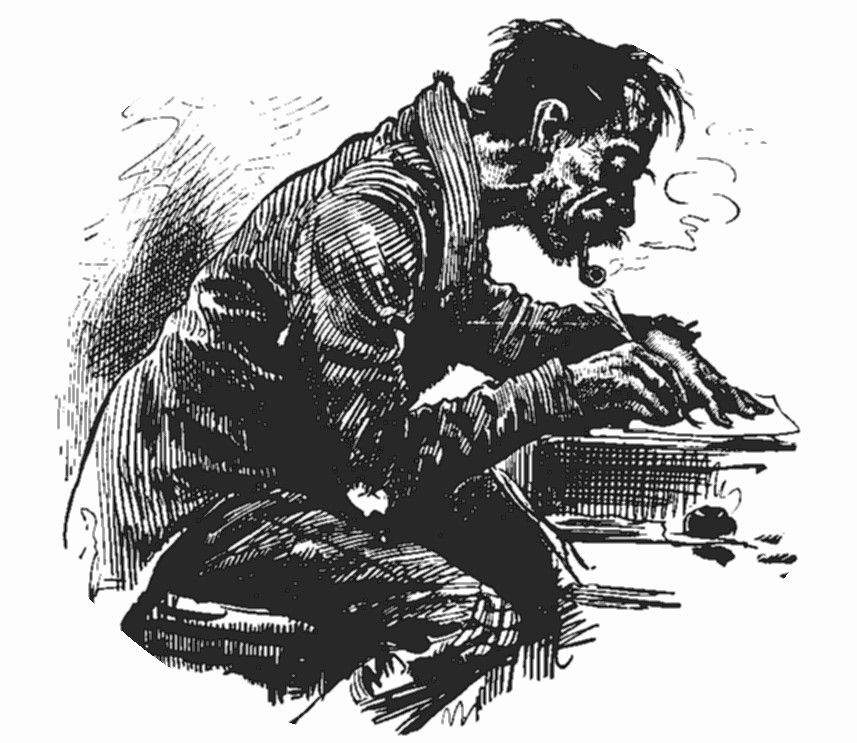
 

Yes, I’m a student and a writer, needless to say money isn’t abundant, but the work sure is.


            There are plenty of other things I’d like to do, like to read and of course write, but I have to sit down and take my studies and sales seriously at some point. I’ll be appearing in my local newspaper any day now the ‘Wrexham Leader’, okay it’s not a big bit of media but I think it suits me well really, the size and scope being modest but known. I do add in a shameless plea to support this new author (so I can release my second book) by buying a copy, or spreading the word.
            Right now, it’s gorgeous, at least for the Brits, in the south of France or Lyon, in between mid and North to some. And the last thing I want to do is stay indoors and study, but I can at least take comfort that I can tan while I work as I sit down to a cup of tea and some miso soup.

For this week, that’s me done and I hope to have another on time update next week, providing I have time. It has been my pleasure to update you all this week on an inside look at my world and interests. So until next time, Read, write, live.

My usual hideaways


My book is now available to order at


Sunday, 23 February 2014

Fear of Ridicule is ridiculous.

As the title suggests, my blog for this week targets those writers who fear ridicule or criticism for what they want to write (or publish). It was this week when I had a friend, give me their reasons why they don’t write seriously despite having some, frankly, great ideas that I’d love to read personally. Their reason being that they feared ridicule for the plot; well what am I supposed to say? I have written, and am probably publishing a book that will offend and be criticised by thousands despite my good intentions to gender equality and neutralisation of religion, it’s a simple theory which I put forth, with many, more complicated ones within making up the story, but this is a quick read blog, for a deeper discussion leave a comment below.
            I would like to say to the world, particularly to anyone out there who can write, wants to, but cannot find the courage to do so; that the world you create on a page, so long as you justify everything in its context you cannot be ridiculed. That is to say, you can’t be criticised critically, of course there will be many who will make you a dart board for their opinions, as I expect and relish with my own work. I direct you, reader, to my post on fantasy writing, and the words of Terry Pratchett, one of many sources of wisdom for my work. All is fair in writing, so long as it has purpose and reason, that one is one of mine.
            I would like to, if I may, encourage writers to plan their works before writing, I remember many years ago now, meeting a Scottish amateur horror, writer, whose method it was to write with no plan; I’m all for streams of consciousness and letting your imagination guide you, but this leaves a lot of room for plot holes and means a lot of needless editing later on. For me it’s best to get emotional as you plan and detach yourself in either the second editing or final editing phase, to be kind to your editor in principle.
            For me and many who were born to write, the act is therapeutic; and act of completing one’s self, some of us were never meant to write and publish, those who do deserve saluting. It takes a lot of courage to subject yourself to the ravages of the critics and the world alike. Personally, I admire those who came before me and aspire to be as good as those who write better than me now and in the future. We all are born with a story, but not everyone has the ability to write it themselves. We have enough poets and writers, but that does not mean those who want it enough can’t find their place where there was thought to be none. It’s all uncharted waters in a continuum where nothing is original. So write, and find that missing part of yourselves on the blank page.
That will do for today. Now get to your desks, to your favourite armchair, or find a spot where you aren’t too squeezed and can have enough light to see the page and write/read good people.
Until next time, read, write, live.

My usual hideaways


My book is now available for pre-order at


Friday, 17 January 2014

Filling in the gaps, or not!

When I found myself unable to find a relevant topic for this week’s blog post and decided now was the time to write about nothing in particular did this, rather clever, topic hit me squarely between the eyes. See what I did there? No? Look again. Still not sure? Then this week I’m talking about the dos and don’ts of fillers. Naturally we will start with the question of what is a filler, what is its use and the pros and cons of using them, when and where. Let’s do this.
            Fillers – are words or phrases inserted into a sentence which have no use other than to make the sentence flowery, or add a little more detail. They are much more common in full length novels and older works, but you will rarely see them in fast-paced novellas or thrillers.
Fillers are used in a whole variety of ways to give your reader time to immerse themselves in your scene from more than just the passer by point of view. Even in language we use terms, such as ‘like’, and ‘y’know’, all used in a way that does not convey their inherent meaning; but these examples only apply to oral language, great for when you want to write speech, but not literature around it.
In a simple sentence you may often see a filler in between two commas, for example ‘Mike’s ball, which was red, flew out of the park with a single swing of his leg’. The filler here being ‘which was red’ it isn’t essential to our understanding of events, but also ‘single’ it was not essential to the clause either.  For those who have studied English at a higher level, it’s all a case of –spot that non-essential clause.
Moving on, we now know what a filler is and why we use it, now when and how to use them, that is their pros and cons are our next focus. Fillers are really useful in chapters where you, as the writer, want to slow down the pace of the story and give the reader time to catch up with evens and deliver some more complex information. The idea of sentences including fillers is, that they are rarely contained to what we call ‘simple sentences’ that is a sentence with one verb and one noun, not strictly true, but it’s less common.
            If you want to write good action, or good horror, that leaves the reader reeling from every blow you inflict, and each limb you sever, you must remember the golden rule of these genres and scenes. Simple sentences win. Your aim in these scenes is to contain any action to a simple sentence for maximum speed and impact, that way you are able to reflect on events later in each gruesome detail; we will talk more about these genres another time.
Final note on this topic, do not abuse the filler, and avoid overuse like the plague. Common filler errors; unless you write in an older style, eliminate 90% of the words like, seemed and was. If it is like something, then show it, nothing ‘seems’ like something, it is or it is not! And was is too passive, make things active. More on some of these again another day
Until next time; read, write live.

My usual hideaways


Wednesday, 1 January 2014

Writing Fantasy, a quick how-to introduction

This time, to spark off the New year; lots of people will want to start off the new year saying, ‘this year I will write a book’ and then have no idea where to start. I’m going to borrow words from many well respected writers, to name one, Terry Pratchett, who have donated words of pure gold in the leaves on our shelves, and given us threads of silver to stich and weave into our own masterpieces.
So let us tackle some theory; for all those aiming to be fantasy writers, we have to ask the question of what is fantasy? Then we must ask, how is it written well? But finally a third question, what genres of fantasy are there?
Fantasy is a difficult genre to pin down, like Science Fiction (which I’ll tackle another day). This is because it bears the features of many other genres, fantasy can talk about a love story between mythical creatures and humans, it can be an adventure to destroy some dark artefact, or even about people waving magic sticks at one-another. The main defining feature of Fantasy is that it involves some kind of supernatural, or other-worldly (rather than extra-terrestrial) power that takes a foreground position throughout the work.
A final note on this is that in some cases where you create realist fantasy, something I’m very interested in due to my dissertation subject, Fantasy does not have to contain anything I have just mentioned, but it can simply borrow from what has been, and transform it into a story. where nothing and everything can be based on fact. Again, it’s a hard genre to pin down unless you spend a lot of time with it.
Secondly, how can we write it well? I refer you back to my post in December about how to write well generally, but here I will expand on how you should treat your reader, gently. I was told once, back when I started seriously chasing my dream by a much more experienced writer that ‘a reader is like a child, they do not like to be shocked or alienated. You must make each step small, take them by the hand and guide them, still filled with wonder, into the world you created’. Pratchett says something very similar, though I will only paraphrase his words; Fantasy is a genre where there are no rules, as long as you can explain why that person has two heads, or why this sword is the only one that can defeat the king of darkness, you can do anything your heart desires.
Finally, what other genres does Fantasy interact with? Well this is why it is the easiest genre (and for some the hardest) to write, it can interact with all of them! A short list of examples, in no particular order could be: High Fantasy, Dark Fantasy, Comic Fantasy and Heroic Fantasy. Fantasy can be funny, scary, charming, mysterious, in-your-face, anything at all, so long as it is written well.
I leave you with this thought, if it’s fiction, it can be Fantasy, but it is not we the writers who ultimately define our book’s genre but the readers. Aim for what you want, write it well (which means learning the rules of that literary genre, a more advanced talk) and then doing it well.
Until next time, read, write and learn.
Ciao
If you have any questions you can find me at:

Wednesday, 18 December 2013

Show Me a Story, Don’t Tell Me, a Much More Technical Approach

As Promised last time, today I am actually going to give writing advice, (yes batten down the hatches and close those blinkers). A newbie giving advice is not exactly a popular idea, but who better to guide the next latest release than the current, right? I’m intending to talk you through the whole process of how to write a story anyone interested in your genre would go wild to read, that is, one aspect that will aid you in this purpose.
So, let’s get theoretical, which makes more sense than starting with practical examples. A story, as with life is made up of a series of actions, you are born, you live, and you one day in the distant future die; three transitive acts in succession. Another example, meeting someone for the first time. You get to know each other by sharing a few facts, this would be the ‘tell’; but if you start ‘telling’ everything straight away, they are going to be put off you pretty quickly as I have learned.
So, rather than saying; I’m Joseph, I practice martial arts, I write and I have a rather avid fear of riding horses; I will spend time with people, let them watch me practice, show them my uniform, show them my books (and watch them scoff) and if I’m adventurous try to get on a horse let them see me unseated for the umpteenth time. The whole point of these examples is, telling someone these things tells them something, letting them see it can be done with words.
Two tips in avoiding ‘the tell’: Avoid the verb ‘to be’ guaranteed that 90% of the instances of ‘I am’ he/she is’ etc. are instances of telling the situation.
Instead I offer this comparison – ‘He was angry’, ‘His brow furrows as a dark look crossed his face’ a purple vein began to throb on his forehead. I knew I had said the wrong thing’. Note I have used the taboo verb in this sentence, but only as a re-affirmation of the situation, emphasis only.
Second tip for the day: adverbs are not your friend. This may seem woefully vague but I believe it was Stephen King who wrote this before me that they are just clutter to your word count: ‘He ran quickly’ could be written more dynamically as, ‘his feet became a blur as he launched himself down the path’. Simple but I know which I would prefer to read.
Technically these two rules, are a good starting point for anyone who is moving up from nowhere to somewhere should start with, all in the aim of taking the reader by the hand and letting them delicately tread into the world you have created.
Until next time, practice, experience and procrastinate, as writing needs a little of all three.

A Bucket of Coffee and some hope

             Hello again, welcome back to my rather sporadic installments of the life of a young Author. The title of this entry speaks...